Thursday, January 29, 2026

COMPARATIVE TABLE OF BARBARESCO CRUS IN THE ASILI VALLEY


Notes on the Ratings

  • Elegance = floral aromas, tannin finesse, refined mouthfeel

  • Power = body, structure, taste intensity

  • Approachability (Immediatezza) = fruit readiness, ease of enjoyment when young

  • Tannin = grip and structure in the mouth

  • Longevity = potential for long-term aging

Friday, January 23, 2026

BARBARESCO 2022 - Riserva - Ca' Grossa. THE CHOICE OF THE BARREL

With the completion of the initial fermentation phase, we now proceed to the barrel selection, a step we consider particularly delicate and strategic. Initially, the use of barriques had been envisaged. However, following targeted market analyses conducted in the United States, we reassessed our approach with the objective of achieving a wine that is both balanced and harmonious, avoiding the risk of excessive oak influence. After a comparative evaluation of two tonneaux (one 500-liter and one 250-liter), the final decision was to adopt a single 700-liter barrel, allowing for greater integration and finesse while preserving varietal expression.

Based on these premises, I turned to a renowned oenologist to seek his advice, given the exceptional quality of his Barbaresco. He recommended a cooperage producer in Italy, located in Bolzano. I must say they immediately proved to be highly competent, and I was pleasantly surprised by their request to taste the wine during its maturation phase in order to calibrate the most suitable barrel solution specifically on the sample.


This choice is part of a broader strategy aimed at achieving the highest possible result from an outstanding wine, with the goal of producing 900 bottles of absolute excellence in every respect.

Saturday, January 17, 2026

THE MOST EXPENSIVE LANDS IN THE WORLD


BAROLO & BARBARESCO & ROERO PARADISES

Wine is not limited to the product in the glass, the label, or on-premise tastings; it is also – and primarily – the outcome of land with varying degrees of viticultural suitability, which can be structured and valued as a real-estate asset and, in some cases, as an object of financial investment. This dimension has increasingly attracted the attention of banks, insurance companies and investment funds, whose involvement in the sector has grown in recent years, albeit largely concentrated in the most highly rated and proven winegrowing areas, where the investment rationale is more clearly defensible in terms of risk and return.

From this perspective, the value of wine is intrinsically linked to the value of the underlying land: the territory functions as the wine’s primary value driver, underpinning its differentiation and premium positioning, while simultaneously representing a central component in broader asset allocation and investment strategies.

And within this financial perspective, The Wealth Report 2025, produced by Knight Frank, was released, establishing a global ranking of vineyard land values and confirming Piedmont as the region with the highest absolute values worldwide—further reinforcing the prestige of its vineyards and wines and underscoring the unique positioning of this region on the international wine investment landscape. According to the report, more than two million dollars are required for a hectare of vineyard in Barolo, over USD 1.2 million to acquire one in Bordeaux–Margaux, and a similar figure in Rutherford, in California’s prestigious Napa Valley.

These figures are, of course, indicative and “can vary significantly within the same region,” the analysts note, but they nonetheless provide a useful snapshot of market trends.

Barolo vineyards in Piedmont rank as the most expensive in the world, posting a 5% increase between 2023 and 2024 and reaching slightly above USD 2 million per hectare (with some transactions reportedly well above the level indicated in the study). France follows with vineyards in the Margaux AOC, within the broader Bordeaux area, which recorded a 4% decline year-on-year but remain valued at around USD 1.25 million per hectare.

California holds its ground: vineyards in the Napa Valley, particularly in Rutherford, reach USD 1.2 million per hectare, with prices broadly stable compared to 2023. Fourth and fifth place are occupied by two French regions: Burgundy’s Côte de Nuits (USD 1 million per hectare, stable) and Champagne (over USD 1 million per hectare, up 2% year-on-year).

Italy appears again in sixth and seventh position, thanks to vineyards dedicated to Brunello di Montalcino (+5% to USD 910,000 per hectare) and to the Bolgheri DOC area (+3% to EUR 810,000 per hectare).

One element that the report obviously could not take into account is the significant tax advantage in the agricultural sector and – specifically regarding the real estate investment in the Tenimenti Terre Imperiali estates – the income potential from leasing the land itself. Under current regulations, agricultural leases are subject to a nominal land tax, amounting to just a few dozen euros per hectare, which increases the net income of the individual landowner according to the applicable tax rate.

For example, assuming a personal income tax rate of 30% and an agricultural lease income of EUR 2,500 per hectare per year, the tax payable would not be 30% of EUR 2,500 (EUR 750), but rather 30% of the cadastral agricultural income, which is calculated based on the land’s official cadastral value (varying by municipality) and is generally much lower. In practical terms, for a hectare of vineyard in La Morra (Barolo terroir) with a cadastral value of EUR 250/ha, the taxable income would be EUR 451, which at 30% results in only EUR 135 in taxes, instead of EUR 750.

However, purchasing vineyard land in Barolo or Barbaresco (with average prices ranging between EUR 650,000 and EUR 1,000,000 per hectare, depending on the area and the specific crus) is not necessarily a highly profitable or rational investment. Moreover, an investor looking to acquire vineyard land in Piedmont will quickly realize that, despite the astronomical prices, finding offers for sale in Barolo (and Barbaresco) is relatively straightforward. If the search extends to the Monferrato region (provinces of Asti and Alessandria), prices drop to around 3% of Barolo levels, and there is a wide availability of land for sale.


And here, in our view, is the region that is far rarer and more difficult to acquire: the Roero, the area located north of the Tanaro River, adjoining at its southern end the territories of the Langhe, and in particular Barolo and Barbaresco. It is practically impossible to find offers for sale here, especially if one is looking for plots larger than 1–2 hectares in a single contiguous unit.

The largest estate in the Roero is Tenuta La Carretta in Piobesi d’Alba, with approximately 35 hectares in a single contiguous plot, followed by Podere Antico di Monteforche with around 11 hectares in a single block. By contrast, most wineries in the Roero—even prominent ones—typically own multiple smaller plots (usually 2–3 hectares each) scattered across different municipalities in the region, rather than in a single consolidated unit.

Friday, January 16, 2026

TENUTA CA' GROSSA UNDER THE SNOW

In the collective imagination, Italy is often associated with a constantly sunny and warm climate. This is, however, a rather outdated stereotype dating back to the 1950s. In Piedmont, and especially in the Cuneo area, winter snowfall is the norm, with beneficial effects on the environment: snow has a “therapeutic” impact on plants and helps limit the spread of pathogenic agents.

Don’t believe it? Here’s the proof for you.


Thursday, January 15, 2026

BAROLO: PRODUCTION REGULATIONS


PRODUCTION REGULATIONS

FOR WINES WITH CONTROLLED AND GUARANTEED DESIGNATION OF ORIGIN
BAROLO

Approved as DOC by Presidential Decree 23 April 1966Official Gazette No. 146 of 15 June 1966
Approved as DOCG by Presidential Decree 1 July 1980Official Gazette No. 21 of 22 January 1981
Amended by Ministerial Decrees of 30 September 2010, 26 November 2010, 30 November 2011,
7 March 2014 and 17 April 2015
Published on the official website of the Italian Ministry of Agricultural, Food and Forestry Policies
(Section: PDO and PGI Products – Wines PDO and PGI)


Article 1

Designation and wines

  1. The Controlled and Guaranteed Designation of Origin “Barolo” is reserved for red wines that comply with the conditions and requirements established by these production regulations, for the following types:

  • “Barolo”

  • “Barolo” Riserva

  • “Barolo” and “Barolo” Riserva with one of the “additional geographical indications” listed in Article 8, to which the indication “vigna” followed by the relevant toponym or traditional name may be added, under the conditions established by Article 8, paragraph 5.

  1. The boundaries of the “additional geographical indications” are defined in the annex attached to these production regulations.


Article 2

Grape variety base

  1. Wines bearing the Controlled and Guaranteed Designation of Origin “Barolo” must be obtained exclusively from grapes grown in vineyards planted solely with the Nebbiolo grape variety.


Article 3

Grape production area

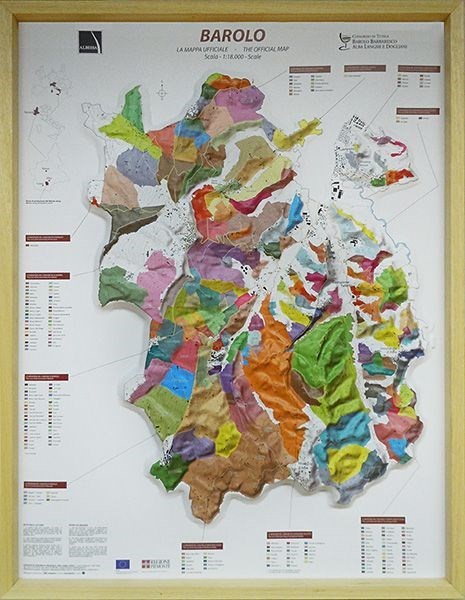
  1. The area of origin of the grapes suitable for producing wines with the Controlled and Guaranteed Designation of Origin “Barolo” includes the entire territory of the municipalities of Barolo, Castiglione Falletto and Serralunga d'Alba, and part of the territory of the municipalities of Monforte d'Alba, Novello, La Morra, Verduno, Grinzane Cavour, Diano d'Alba, Cherasco and Roddi, all within the Province of Cuneo.

(The document then provides a detailed cadastral and topographical description of the boundaries of the production area, which is translated faithfully but omitted here for brevity. I can translate it in full word-for-word if needed.)


Article 4

Viticultural practices

  1. The environmental and cultivation conditions of vineyards destined for the production of “Barolo” wines must be those traditionally found in the area and suitable for conferring the specific quality characteristics to the grapes and the resulting wine.

  2. In particular, vineyards must comply with the following requirements:

  • Soils: clayey, calcareous, or combinations thereof

  • Topography: exclusively hilly; valley floor, flat, damp or insufficiently sun-exposed land is strictly excluded

  • Altitude: not lower than 170 m and not higher than 540 m above sea level

  • Exposure: suitable to ensure proper ripening, excluding for new plantings the north-facing slopes between –45° and +45°

  • Planting density: not less than 3,500 vines per hectare for new plantings or replantings

  • Training system: espalier (controspalliera)

  • Pruning system: Guyot

  • Any form of forcing is prohibited.

  1. The maximum grape yield per hectare and the minimum natural alcoholic strength of the grapes are as follows:

With additional geographical indication and “vigna”:

  • Barolo / Barolo Riserva:

    • 7.2 t/ha

    • 13.00% minimum natural alcohol

(Specific reduced yields are provided for vineyards younger than seven years.)


Article 5

Vinification rules

  1. Vinification and mandatory ageing must take place within the production area defined in Article 3, with certain authorized exceptions within the Province of Cuneo under specific conditions.

  2. The maximum grape-to-wine yield must not exceed:

  • 70%, corresponding to a maximum of 56 hl/ha

  • After ageing: 68%, corresponding to 54.4 hl/ha

  1. The minimum ageing periods are:

  • Barolo: 38 months, of which at least 18 months in wood

  • Barolo Riserva: 62 months, of which at least 18 months in wood

Release for consumption is allowed:

  • Barolo: from 1 January of the fourth year after harvest

  • Barolo Riserva: from 1 January of the sixth year after harvest


Article 6

Characteristics at release for consumption

Barolo and Barolo Riserva must display:

  • Colour: garnet red

  • Aroma: intense and characteristic

  • Taste: dry, full-bodied, harmonious

  • Minimum total alcohol: 13.00% vol

  • Minimum total acidity: 4.5 g/l

  • Minimum non-reducing extract: 22.0 g/l


Article 7

Barolo Chinato

The designation “Barolo Chinato” is permitted for aromatized wines produced using Barolo DOCG as the base wine, without the addition of musts or wines not entitled to the designation.


Article 8

Designation and presentation

The designation “Barolo” and “Barolo Riserva” may be followed by one of the officially recognized additional geographical indications (full list translated upon request).

The indication “vigna” followed by a toponym or traditional name is permitted only in conjunction with an additional geographical indication and under strict traceability conditions.


Article 9

Packaging

  • Bottles must be of the traditional Albeisa shape or similar, made of dark glass

  • Minimum bottle size: 37.5 cl (excluding 200 cl bottles)

  • Special large formats (6, 9, 12, 15 liters) may be authorized for promotional purposes


Article 10

Link with the geographical environment

This article describes:


Article 11

Control Agency

Valoritalia S.r.l.

Authorized control body designated by the Italian Ministry of Agricultural, Food and Forestry Policies. 

VIGNA COSTA DI CASTELLERO - PRIOCCA


VIGNA COSTA DI CASTELLERO

- Priocca d'Alba


The Municipality of Priocca boasts, among its many attractions, a remarkable panoramic viewpoint known as “Tre Pini”, truly unique in the Roero region. This hill is particularly striking because its summit suddenly shifts in slope in an almost unnatural way, making vineyard cultivation on these terraces exceptionally challenging.

On the western to northwestern-facing side of this hill, overlooking the Municipality of Castellinaldo, there is a section where the slope becomes perfectly suited for vines. Here lies the Vigna Costa di Castellero, named after the cru/MGA “Castellero” where it is situated. The name itself hints at history: the shape of the hill suggests that beneath it may once have stood a castle or fortification, likely destroyed during the Saracen pirate raids. The vineyard’s name, Costa di Castellero, thus reflects its position on the slope below where the castle once proudly stood.

From a geological perspective, the soils of this vineyard belong to the S7 zone, characterized by Blue Clays from the Lower Pliocene formation. These soils, combined with the unique slope and exposure, create a terroir that is both challenging to cultivate and remarkable in its potential for viticulture.


An interesting feature of this vineyard is its location almost on the border with the Municipality of Castellinaldo. This unique positioning allows Vigna Costa di Castellero to proudly cultivate Barbera d’Alba D.O.C. – Castellinaldo d’Alba Subzone. This subzone represents a small and highly specific area within the larger Barbera d’Alba D.O.C., distinguished by its uniqueness and considered the premium expression of Barbera d’Alba, as it is the only officially authorized subzone. Its prestige is comparable to the Barbera d’Asti Nizza subzone, which later became the autonomous Nizza D.O.C.G.

The Barbera d’Alba D.O.C. – Castellinaldo Subzone specifically encompasses areas of the eastern Roero, covering parts of seven municipalities: Castagnito, Guarene, Vezza d’Alba, Canale d’Alba, Priocca, and Magliano Alfieri, as illustrated on the official maps.

This subzone was conceived and promoted due to its distinctive terroir, understood as the combination of pedoclimatic characteristics that give rise to this one-of-a-kind wine. In particular, the soil is marly-gypsum with sandstone (marine sedimentary rocks rich in sand), interspersed with white and gray-blue marls, containing high levels of limestone, silt, and a touch of clay. The geology of this area is markedly different from that of the classic western Roero, where the famous Rocche del Roero are found. The steep hills in this region were formed by the erosion and shifting course of the Tanaro River, from the Carmagnola direction toward Asti, creating formations very similar to the Langa of Barbaresco, which lies in close proximity to the Roero.

Indeed, the Ca’ Grossa Estate, in the part facing the Tanaro River, offers breathtaking views over the eastern Roero, particularly overlooking the Guarene Castle, highlighting the connection between landscape, terroir, and viticulture in this exceptional area.

An interesting feature of this vineyard is its location almost on the border with the Municipality of Castellinaldo. This unique positioning allows Vigna Costa di Castellero to proudly cultivate Barbera d’Alba D.O.C. – Castellinaldo d’Alba Subzone. This subzone represents a small and highly specific area within the larger Barbera d’Alba D.O.C., distinguished by its uniqueness and considered the premium expression of Barbera d’Alba, as it is the only officially authorized subzone. Its prestige is comparable to the Barbera d’Asti Nizza subzone, which later became the autonomous Nizza D.O.C.G.

The Barbera d’Alba D.O.C. – Castellinaldo Subzone specifically encompasses areas of the eastern Roero, covering parts of seven municipalities: Castagnito, Guarene, Vezza d’Alba, Canale d’Alba, Priocca, and Magliano Alfieri, as illustrated on the official maps.

This subzone was conceived and promoted due to its distinctive terroir, understood as the combination of pedoclimatic characteristics that give rise to this one-of-a-kind wine. In particular, the soil is marly-gypsum with sandstone (marine sedimentary rocks rich in sand), interspersed with white and gray-blue marls, containing high levels of limestone, silt, and a touch of clay. The geology of this area is markedly different from that of the classic western Roero, where the famous Rocche del Roero are found. The steep hills in this region were formed by the erosion and shifting course of the Tanaro River, from the Carmagnola direction toward Asti, creating formations very similar to the Langa of Barbaresco, which lies in close proximity to the Roero.

Indeed, the Ca’ Grossa Estate, in the part facing the Tanaro River, offers breathtaking views over the eastern Roero, particularly overlooking the Guarene Castle, highlighting the connection between landscape, terroir, and viticulture in this exceptional area.


The decision to expand the Tenimenti Terre Imperiali vineyards into this area was driven by the desire to offer a broader expression of Barbera d’Alba, allowing for a variation between the wine produced south of the Tanaro River, at the Tenuta Ca’ Grossa in Barbaresco, and that cultivated north of the river, in the Vigna Costa di Castellero, within the Castellinaldo Subzone.


The Vigna Costa di Castellero is located in the Roero cru situated within the Municipality of Priocca, specifically named Castellero (highlighted in blue on the second map).


Priocca's Cru's

The Castellero Cru (see map above) is also the smallest of the nine Roero crus in Priocca and is located in a central position within the area.


Vigna di Castellero – Vineyard Plot “Margherita d’Alcontres”: Barbera d’Alba – Subzone Castellinaldo D.O.C. (Red plot)

Vigna di Castellero – Vineyard Plot “Alessandro d’Alcontres”: Roero Arneis D.O.C.G. (Blue plot)


Wednesday, January 14, 2026

PIEDMONT DE NOUVEAU "THE MOST UPSIDE POTENTIAL REGION IN THE WORLD" A.D. 2026 - Version Française


Avec ce post, ainsi qu’avec le précédent, l’objectif a été d’élargir le champ des thématiques abordées par ce blog. S’il restera fermement ancré dans l’histoire et l’évolution continue des Tenimenti Terre Imperiali — y compris des choix stratégiques et de production tels que la taille des fûts, la sélection des fournisseurs et les standards de qualité — il a également été jugé essentiel d’élargir la réflexion aux dynamiques plus larges qui façonnent le paysage vitivinicole du Piémont. Une attention particulière sera portée aux territoires où se situent les domaines familiaux : les Langhe, le Roero et le Monferrato.

L’article qui suit a pour ambition d’offrir aux lecteurs une perspective plus large et, nous l’espérons, de souligner la valeur et l’orientation de ce blog. Vivre et travailler dans une région identifiée pour 2026 comme présentant le plus fort potentiel de croissance sur le marché mondial des grands vins — devant la Champagne, la Bourgogne et la Toscane — est une source de fierté légitime. Dans ce cas précis, le texte est proposé en français à l’attention de nos cousins d’outre-Alpes, sachant que les quatre premières places du classement sont de toute façon occupées par des régions françaises et italiennes, pour cause.

Par ailleurs, l’état d’esprit piémontais est traditionnellement marqué par la retenue et la modestie : discret, peu démonstratif, et souvent enclin à minimiser les accomplissements. C’est une approche culturelle que je reconnais profondément et que je vis personnellement.

J’ai fait l’expérience directe de ce sentiment. Pendant de nombreuses années, j’ai considéré Barbaresco — ainsi que le fait de posséder le plus vaste domaine foncier contigu de la zone — comme quelque chose de parfaitement ordinaire, à peine plus remarquable que la possession d’une voiture. Ce n’est que plus tard dans ma vie, sans doute trop tard, lorsque j’ai commencé à mieux comprendre le monde international du vin et à échanger avec des professionnels dont la vie et l’activité sont entièrement consacrées au vin, que j’ai pleinement pris conscience de la valeur de ce que j’avais entre les mains.

Lorsqu’on naît dans un contexte de confort et d’avantages hérités, il est souvent difficile de mesurer à quel point la fortune a été bienveillante. Cette prise de conscience n’émerge bien souvent que lorsque ces privilèges sont remis en question, fragilisés, voire, dans certains cas, retirés.

Cela étant dit, venons-en maintenant au cœur de ce post. Presque par hasard — et sans que cela n’ait suscité une attention particulière au sein même du Piémont — j’ai découvert qu’en novembre 2025, le Golden Vines® Report avait décerné au Piémont la médaille d’or mondiale, le reconnaissant comme la région vitivinicole offrant le plus fort potentiel de développement.

Le prestige de cette distinction apparaît clairement lorsqu’on considère le profil des votants. Comme indiqué sur son site officiel, The 2025 Golden Vines® Report marque la création de la Golden Vines® Academy, une instance de référence composée de plus de 800 professionnels qualifiés des grands vins et des spiritueux rares. Ces experts participent à l’enquête du Golden Vines® Report et déterminent les Golden Vines® Awards, des distinctions internationales reconnues célébrant l’excellence dans le domaine des grands vins.

Le rapport 2025 couvre les évolutions du marché tout au long de l’année 2025 et propose des perspectives pour 2026. Ses conclusions reposent sur les réponses de plus de 830 acteurs internationaux de premier plan du marché des grands vins et des spiritueux rares, parmi lesquels figurent 41 Masters of Wine, 31 Master Sommeliers, 58 Advanced Sommeliers, 37 titulaires du diplôme ASI, ainsi que 204 détenteurs de la qualification DipWSET.

Après la domination de la Champagne sur la période 2022–2024, le Piémont s’impose désormais comme la région le plus fréquemment citée pour son potentiel de progression en 2026. Représentant 20 % des réponses, la région italienne est perçue comme particulièrement bien positionnée, principalement grâce à l’intérêt mondial soutenu pour les grands vins italiens.

La Champagne et la Bourgogne suivent de près, avec respectivement 17 % et 14 % des réponses, traduisant une confiance durable dans la demande à long terme pour les vins issus de ces régions historiques.

Conformément aux conclusions du rapport 2024, la Toscane arrive ensuite avec 12 % des réponses. Les régions vitivinicoles australiennes (9 %), la Californie (8 %) et Bordeaux (6 %) complètent le groupe des régions appelées à afficher une performance solide en 2026. Les 14 % restants se répartissent entre d’autres régions et pays producteurs de vin à travers le monde.